
Most Poker Pros Are Broke
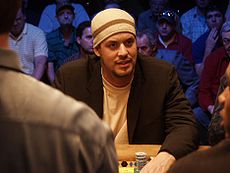
This man is the richest poker player in the world with a net worth of $23 million. He is especially popular for his bold decisions and a unique skillset which enabled him to win the world poker tour championship. He is most admired young professional poker player who is nicknamed as the “Magician” because of his miraculous gameplays. The truth is that poker today, Texas Hold’em in particular is a game where even most recreational players are not as unaware as they were even 10 years ago. The days of a pro “printing money” versus amatures are over for now.
- Most Poker Pros Are Broke On Netflix
- Most Poker Players Go Broke
- Most Poker Pros Are Broke Free
- Poker Pros Names
Be honest, how many of you reading this article have wanted to be an online poker pro at some point since discovering such a thing was possible? I know I have — and on more than one occasion.
Being able to play poker for a living seems like the perfect job — for someone who loves poker at least. But it’s harder than you would like to believe. How to be an online poker pro? We have six quick poker tips for you to set you on your way to your dream job.
How to become a professional online poker player in one easy step would be to quit your job and use poker as your sole source of income. While this instantly makes you a poker pro, it is not advised, not even a tiny amount, for reasons that we’ll cover shortly.
1. Study all aspects of the game
Studying the game of poker is crucial if you want to learn how to succeed as a professional online poker player. When you think you have learned all there is to learn about poker, you need to study and research even more. In fact, you should never stop learning because standing still in this game means you’re going to be left behind.
Read articles on PokerNews, check out the 10 most important poker strategy books ever written, join a training site, or hire a coach. Any edge you can create for yourself will eventually lead to profits.
You can also practice playing no limit hold'em and pot limit Omaha cash games and tournaments for free at WSOP Social Poker. The games are completely free to play, meaning you can play poker for fun, try new things and never risk any of your bankroll.
2. Prove you’re a winning player
Remember how we said that handing in your notice and jumping straight into being a professional poker player isn’t a good idea? This is one of the main reasons why: you need to prove to yourself you know how to be a profitable online poker player first.

Many people bag a big score in a tournament, or win the equivalent of two months’ wages at the cash tables and start thinking that this game is an easy way to make a living. Wrong!
You need tens of thousands of cash game hands and tournaments (if not hundreds of thousands) to prove you’re a winning player. If you’re not a winning poker player over the long term, you’ll soon be heading back to your old boss cap-in-hand hoping to be reemployed.
Is This Your First Step To Becoming a Poker Pro?They say practise makes perfect and what better way to improve your online poker skills than by doing so without any risk at all to your poker bankroll? This is possible at WSOP Social Poker because it is a free-to-play online poker site that has cash games and tournaments running around the clock.
Try out new strategies completely free at WSOP Social Poker and set yourself on the way to becoming a professional poker player.
Play Now3. Be realistic
Once you’ve ascertained that you’re a winning poker player, it’s time to begin trying to figure out how many hands or tournament you’ll need to play in order at least to match your previous salary. Here’s where many people fail.
When you have a salaried job, you are usually paid on the same date every month regardless of how productive your week or month is (within reason). You’re almost certainly paid while on vacation, or if you’re sick.
Are you really going to sit grinding for 60 hours every week?
The fact you have to go to work five days per week is probably enough to make you get out of bed and go to your job. But what if none of that was true?
You may have aspirations of making $150,000 a year
, and that may be possible. But make sure you factor in at least three full weeks “holiday.” You should also plan for being sick and unable to play for a couple of weeks per year. Also, ask yourself — are you really going to sit grinding for 60 hours every week? Do you think you can make enough money at $0.25/$0.50 to warrant giving up your job?Most Poker Pros Are Broke On Netflix
How many online poker pros are there who wake up at 12:00 p.m., play online poker for two hours, and then swan off enjoying life to the max. The answer is not many, and those who do generally don’t succeed as professional online poker players for any meaningful length of time.
4. Give playing poker professionally a trial run
Even if you have done all of the above, you should at least give playing for a living a trial run, so you have experience of how to play online poker professionally.
Take a week’s holiday from your job and spend the next five working days doing nothing but playing poker (at least you’ll be getting paid even if you have a bad week!). You may surprise yourself at how difficult it is to motivate yourself to play poker non-stop for a week. Or how after four hours grinding you suddenly lose all concentration. Or how after losing 15 buy-ins during the first three days you no longer want to get out of bed at 7:00 a.m.
It’s best to find out you’re not cut out for the life of a poker pro before you take the plunge into playing for a living.
5. Build a big bankroll and liferoll
You haven’t gone through all the previous steps but still think you know how to be an online poker pro. That’s fine, but do you have a bankroll and your other finances in order?
Most poker pros like to have at least six months’ worth of life expenses tucked away in a separate bank account in case things go pear-shaped. Dipping into your poker bankroll to cover your bills is a big no-no.
Your bankroll should be larger than a recreational player would have because you never want to drop down in stakes. Doing so, dropping down that is, makes it harder to reach your monetary goals — much harder. It’s better to be a bankroll nit than it is going broke.
6. Act professionally
Professional poker players often cite the freedom it gives them for playing for a living, but that’s not to say you shouldn’t have a professional attitude towards the job. Some of the best poker players in the world are extremely disciplined and in their approach every single day.
You wouldn’t rock up to work and put your feet on the desk or lounge around on the sofa with your laptop, so don’t do it as a poker pro. How to become a professional poker player? Starting acting like one, a professional that is.
This article was originally published on Jul. 5, 2017. Last update: Jun. 20, 2019.
Be sure to complete your PokerNews experience by checking out an overview of our mobile and tablet apps here. Stay on top of the poker world from your phone with our mobile iOS and Android app, or fire up our iPad app on your tablet. You can also update your own chip counts from poker tournaments around the world with MyStack on both Android and iOS.
Tags
Online PokerPoker PlayersPoker StrategyPoker TournamentsPokerNews StrategyPokerNews Updates
Alec Torelli is a poker professional originally from California, but regularly travels the world. Torelli has over $1.5 million in live tournament earnings and over $500,000 in online tournament earnings. On his record are two World Series of Poker final tables and two World Poker Tour final tables. You can follow Torelli on Twitter, through Facebook, or via his popular blog.
Money is an indispensable tool for a poker player. When you run out you can no longer play. Somehow it seems though, when it comes to swings and managing money, knowing 'what' to do with the money and knowing 'how' to do it are two very separate things. Here we'll focus on the 'how.'
It was the summer of 2008, and I was on a heater. A massive heater. I won, spent and lived as if it would continue forever. It's funny how something as trivial as a card game can make one feel invincible.
Poker though has a way of humbling us. Many dollars later, I learned a painful, expensive lesson: winning is never as good as losing is bad. Practically speaking, the more money you have the less you should worry about earning, and the more you should focus on defending.
It took me over a year to recover. I moved down dramatically in stakes (and ego) and did the only thing I could: grind. I focused on skills like how to manage money, assess risk and developed rules for deciding what limits to play or when to take shots. Here's what I learned.
1) SET GOALS
The purposes of goal setting are plentiful: provide motivation for playing our best, make the game more fun and stimulating, track progress, and liberate us from the burden of choice. The lure of a big game is that one can win a lot of money in one session. But if I know that this month I want to play 100 hours and make $10,000 (assuming I expect to earn $100 per hour), suddenly, I am less compelled to take shots to get there. When I have a goal that is motivating, challenging yet attainable, I alter my priorities toward a less impulsive, long-term focus.
2) SHIFT THE FOCUS
If someone asks how I am doing in poker, my answer is the same: I am even. The logic is this. Right now there is only the present moment and in this moment, there is no change. Whatever downswing I had or hand I lost is in the past.
How does one even interpret the phrase 'I'm winning?' Does it refer to today? A week? A year? I can always be up or down. The answer is arbitrary and changes depending on how I define the time frame. Winning and losing only exists in your mind. In the present moment you are always even.
I know I am doing this correctly when I don't lament over folding for 10 hours. After all, if I am always even, then each hand is my first hand.
Most Poker Players Go Broke
The only time I take a streak into consideration is when I feel that my opponents will play differently because of it.
3) PLAY WITH INDIFFERENCE
How do I know if I'm playing within my means? I want the game to be comfortable enough not to think twice about going all in on a bluff, but still sting a little if I am caught. If I can pull the trigger yet feel a sting, it means I'm in the sweet spot.
4) TEST YOURSELF
Most Poker Pros Are Broke Free
I successfully play with indifference when I do not root for certain cards to come. Favoring an outcome could affect my decision-making.
Remember, the job of a professional is to process the information and use it to make the best decision possible without caring about the result. I can want to win without being emotional. And, after the session is over, I am free to celebrate. And I am also free to care.
Losing a million dollars isn't a problem ... if you have a billion. Regardless of stakes, one must ensure a sufficient supply to withstand the swings of the game.
So what swings can you expect? In cash games, at least 60 full buy ins are necessary. (At a $50/$100 game, with a $10,000 buy in, you need a $600,000 liquid bankroll). More is required for tournaments. I like to use these variance simulators for cash games and tournaments to see just how profound the role of luck is, particularly in tournaments, where the best player in the world can go a lifetime without winning.
Poker Pros Names
Lastly, don't confuse bankroll and net worth. They aren't the same. The former should always be a slice of the pie. Only play with the money you allocated to poker and you'll never go broke!
And now, I'd love to hear from you. What did you learn from your swings? Share your experience in a comment! Your story can inspire others.
For more poker strategy, make sure to tune in every week for new episodes of the Strategy with Kristy podcast. Feel free to send in questions, ideas or suggestions for the podcast to [email protected] Also remember to follow PokerNews on Twitter for up-to-the-minute news.
Tags
Alec TorelliPokerNews StrategyPoker TournamentsCash PokerRelated Room
Full TiltRelated Players
Alec Torelli